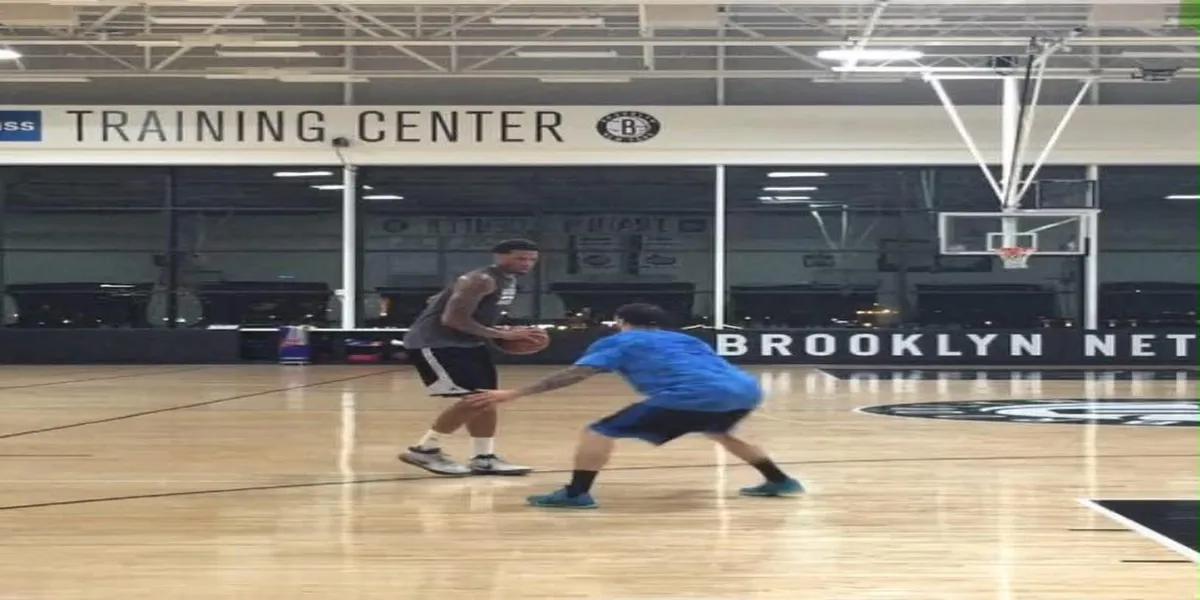
Can 1on1 Basketball Training Build Your Child's Confidence?
You've seen it from the bleachers. In the driveway, your child is smooth. They hit shots, try new moves, and talk about the game nonstop. Then the real game starts and something changes. They pass the ball the second they catch it. On the car ride home they go quiet, and you're left wondering what happened to the kid you watch every night after dinner. If that sounds familiar, your child isn't lacking talent. Most of the time, they're lacking confidence, and that is exactly where 1on1 basketball training can make a real difference.
Why Do Talented Kids Freeze in Games?
Talented kids freeze in games because they aren't sure their skills will hold up under pressure. Confidence isn't something a child is born with. It's built from proof, and most young players have never had the chance to test a move enough times, with honest coaching, to trust it when a defender is close and everyone is watching.
Kids don't freeze because they're weak or because they don't care. A crossover that works in the driveway feels risky in a game if they've never tried it under pressure. So they play it safe. They pass it away. They hide.
That hesitation usually comes from one of three places. They've been corrected in front of others and it stung. They've never had anyone show them exactly what to fix. Or they're comparing themselves to the kid next to them and losing that comparison every day.
None of that gets solved by telling your child to "just be confident." Confidence comes from evidence. Kids believe in themselves once they've proven, over and over, that they can do something. The real question is where they get the chance to build that proof.
How Does 1on1 Basketball Training Build Confidence?
1on1 basketball training builds confidence by giving your child a private space to struggle, get corrected, and succeed without an audience. Every rep is watched, small mistakes are fixed before they become habits, and each small win becomes proof. Stack enough proof and your child starts to believe it on game day.
In a team practice, your child is one of a dozen or more players. The coach has a game plan to run and limited time to slow down for one kid. That's not a knock on team coaches. It's just reality.
1on1 basketball training in Lewisville changes the setting completely. There's no line to wait in and nobody to compare against. A child who's self-conscious about their left hand can work on it without teammates watching. A player who rushes their shot can slow it down without hearing anyone laugh.
Then the wins start stacking up. Small ones at first, like a cleaner footwork pattern or a pull-up they finally trust. Over weeks and months, that proof turns into belief, and belief is what shows up when the game starts. If you're new to this format, our parent's guide to one-on-one training walks through what to look for in a private coach.
What Does NBA Player Development Teach Us About Young Athletes?
Professional player development teaches that the best players aren't fearless, they're prepared. Their confidence comes from routines repeated thousands of times, coaches who hold a clear standard, and an honest read on their own strengths and weaknesses. Young athletes build confidence the same way, scaled to their age and level.
Coach Kevin has spent more than 15 years developing professional players, and you can read more about his coaching background here. The reason that experience matters isn't the names. It's what it taught him about where confidence really comes from.
At the highest level, confidence doesn't come from hype or pep talks. When the moment gets big, prepared players don't have to think. They trust the work.
Your 10-year-old is no different. The same principles that help a professional handle pressure can help a young player stop shrinking in games. Clear goals. Daily habits. Honest feedback delivered in a way that builds them up instead of breaking them down. Private training is where those principles fit best, because the whole plan can be shaped around one child's game, personality, and pace.
You're Not Paying for Workouts. You're Investing in a System.
When you invest in private training, you're not buying a number of basketball workouts. You're investing in a development system around your child: structure, accountability, mindset training, homework between sessions, and intentional skill work. The sessions matter, but the system around them is what turns practice into lasting confidence.
It's easy to look at a monthly cost and think of it as paying for a certain number of sessions. Good private training isn't that. We don't believe young athletes need more random workouts. They need a system.
At Prime Impact Basketball, every athlete moves through the same Committed Player Development System:
Skill → Mindset → Homework → Accountability → Confidence → Game Performance
Notice where confidence sits. It isn't the first step. It's earned through the steps before it, which is why it holds up in real games instead of fading after one good practice.
That thinking is behind The Blueprint, our one-on-one program. One athlete, one plan. Sessions are built around your child's game, position, and goals. Every athlete leaves with hoop homework and a homework journal, and we break down film together so they start reading the game instead of guessing. For athletes in 3rd to 8th grade who also want to compete alongside other driven players, our Committed Player Program runs on the same system in a group setting.
What Does Growing Confidence Look Like?
Growing confidence looks like small, steady changes parents usually notice first. Your child calls for the ball instead of hiding from it, takes the open shot without glancing at the bench, and sprints back on defense after a turnover. At home, "I'm not good at that" slowly turns into "I've been working on this."
Confidence rarely shows up as one big moment. It sneaks in through those small shifts, and they're worth more than any single stat line. They're signs your child is starting to trust themselves, and that trust tends to carry over into school, friendships, and other challenges.
You can see that kind of change in these player transformations, where the biggest difference often isn't a new move. It's how the player carries themselves.
How Can You Support Your Child's Confidence at Home?
You can support your child's confidence at home by keeping the car ride calm, praising effort over results, celebrating small progress out loud, letting them own their goals, and being patient with the process. Training does a lot of the heavy lifting, but home is where a child decides whether trying hard feels safe.
Keep the car ride calm. After a game, ask what they enjoyed or what they learned. Save the breakdown of mistakes for their coach.
Praise effort over results. "I loved how hard you played defense" builds more confidence than "Nice, you scored ten."
Celebrate small progress. If they finally made three left-handed layups in a row, notice it out loud.
Let them own their goals. Ask what they want to get better at. Kids work harder on goals that feel like theirs.
Be patient with the process. Confidence builds in layers. Some weeks will feel like a leap forward and others won't. That's normal.
When home and training pull in the same direction, kids feel supported from every side, and that's when confidence really takes root.
Ready to Help Your Child Play With Confidence?
If you've been watching your child hold back and wondering how to help, you've already taken the first step by paying attention. The next step is finding the right environment for them to build that belief.
If your family is in Lewisville or nearby in North Texas, start with our short Player Potential Survey. Coach Kevin's team reads every response personally, and if it looks like a fit, we'll set up a qualifying call to talk through your child's game and where their confidence is getting stuck. Either way, keep reminding them of this: confidence is built, one rep at a time.
FAQs
How long does it take for 1on1 basketball training to improve confidence?
Every child moves at their own pace. Some families notice small changes early, like more willingness to shoot or call for the ball. Deeper, lasting confidence usually builds over months of consistent training and homework. The key is steady work, not quick fixes.
Is private training better than group training for a shy child?
For many shy or self-conscious kids, private training is a good starting point because they can make mistakes without anyone watching. Once they've built some belief in their skills, a group setting helps them carry that confidence into live competition. Many players benefit from both over time.
What age is best to start private basketball training?
Readiness matters more than age. A child who can stay focused for a full session and genuinely wants to improve is usually ready. Our Committed Player Program serves athletes in 3rd to 8th grade, and a coach can help you judge readiness for one-on-one work after seeing your child play.
What does homework between sessions look like?
It's short, focused work your child can do at home, like ball-handling routines, form shooting, or footwork patterns. At Prime Impact, athletes leave with hoop homework and a homework journal so the skills keep building between sessions instead of pausing.
My child gets really down on themselves after mistakes. Can training help?
Yes. Handling mistakes is part of mindset training, and it's a skill like any other. A good coach teaches players how to reset quickly, focus on the next play, and see mistakes as part of learning instead of a judgment of who they are.
How do I know if my child needs 1on1 training or just more practice?
If your child practices often but still hesitates in games, more reps alone may not fix it. They likely need someone to identify exactly what's holding them back and build a plan around it. A short conversation with a coach can help you figure out the best path.
