Can a Personal Basketball Trainer Help With Playing Time?
You watch warmups and your child looks ready. Then the whistle blows and they're on the bench. First quarter, second quarter, maybe a few minutes at the end when the game is already decided. On the drive home, they stare out the window, and you're both thinking the same thing: what does the coach see that we don't? If you've been wondering whether a personal basketball trainer could change that, you're asking the right question. It can, as long as the training targets the real reasons your child isn't getting on the floor.
Why Good Players Still End Up on the Bench
Most kids who sit aren't bad players. They're players the coach doesn't fully trust yet.
That's hard to hear, but it's good news, because trust can be built. A coach has eight or ten spots in a rotation, a few practices a week, and a game plan to run. When minutes are tight, they go to the players who make the fewest mistakes, play hard every possession, and do what's asked of them without being told twice.
Your child might have a nice jumper in the driveway. But if they turn the ball over under pressure, get lost on defense, or hesitate when the ball finds them, the coach notices. Those small moments decide who plays.
The problem is that team practice rarely gives one player time to fix them. So the same habits that keep your child on the bench keep showing up week after week.
What Coaches Actually Look For When Handing Out Minutes
It's rarely about who has the flashiest moves. It's about who the coach can count on when the game is close.
Skills the Coach Can Count On
Coaches want reliable players. Can your child catch a pass on the move and make a good decision? Can they dribble with their weak hand without looking down? Can they finish a layup through contact?
Effort and Habits Coaches Notice
Sprinting back on defense. Talking on the floor. Diving for a loose ball. Being the first one in line at practice. These things don't show up in the box score, but coaches see every one of them. Players who bring energy every day give the coach a reason to put them in.
Basketball IQ and Understanding a Role
The players who earn minutes usually know exactly what their job is. Maybe it's guarding the other team's best shooter, setting screens, or spacing the floor. Kids who understand their role, and do it well, become players the coach can't leave out.
Want to Know What’s Keeping Your Athlete Off the Floor?
Start with a qualifying conversation about your athlete’s current game, goals, habits, and what they need to improve.
Apply NowHow a Personal Basketball Trainer Closes the Gap
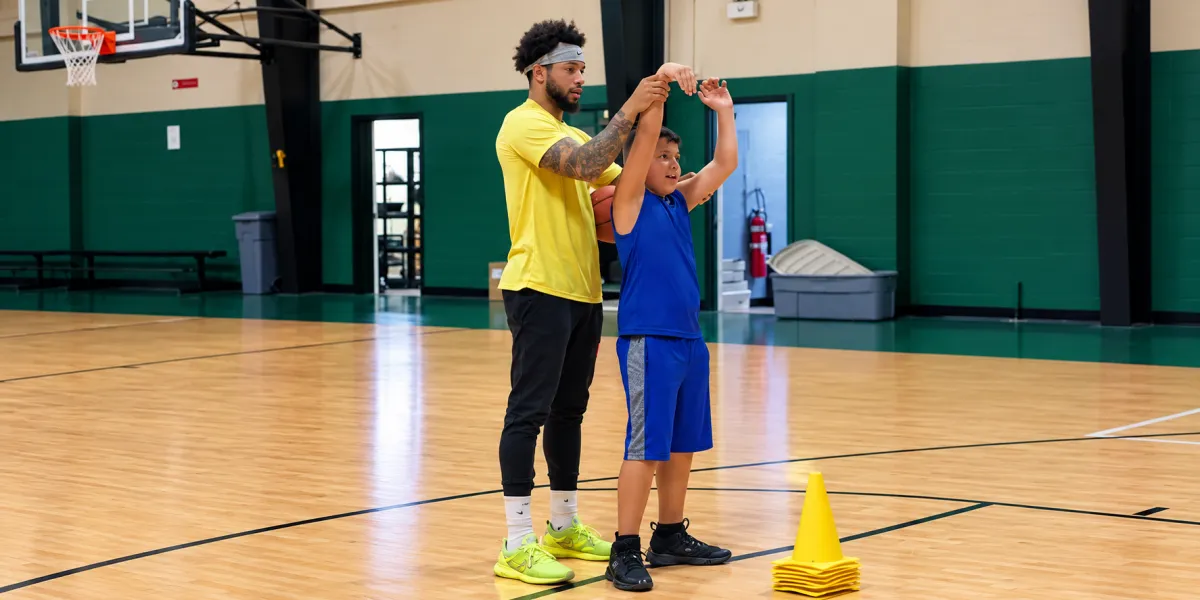
This is where one-on-one work earns its value. A good trainer figures out what's standing between your child and the rotation, then builds a plan to fix it.
Finding the Real Reason Your Child Is Sitting
Sometimes the issue is obvious, like a weak left hand. Other times it's hidden, like poor footwork that slows down every shot, or a habit of standing still on offense. A trainer who has watched hundreds of young players can spot those patterns quickly. If you're not sure whether your child needs this kind of help, this breakdown of why a child might need a personal trainer is a good place to start.
Building a Plan Around One Role
Once the gaps are clear, training gets specific. The goal isn't to turn your child into a different player overnight. It's to make them valuable to their team right now while they keep growing.
Short-Term Focus: Earning the Coach's Trust
This might mean cleaning up ball handling so they stop turning it over, or sharpening defensive slides so they can stay in front of their matchup. These are the fixes a coach notices fast.
Long-Term Focus: Expanding Their Game
At the same time, the trainer keeps building the skills your child will need next season and the season after. A reliable catch-and-shoot today can grow into a pull-up jumper next year.
Practicing Under Game Pressure
Skills that only work when nobody's guarding you won't earn minutes. A strong personal basketball trainer adds pressure on purpose: tight defense, time limits, quick decisions, and reps when your child is tired. That way, when they finally get into a real game, the moment doesn't feel bigger than they are.
Two Paths. One Goal.
Prime Impact Basketball gives serious athletes structured ways to improve skills, confidence, decision-making, accountability, and game habits.
Focused one-on-one development built around your athlete’s individual strengths, weaknesses, role, and next step.
Structured player development combining basketball training, accountability, mindset, live reps, and long-term growth.
What Pro Player Development Teaches About Earning Minutes
Coach Kev has spent years in professional player development. The lesson from that world isn't about famous names. It's about how players at the highest level keep their spot on the floor.
Pros who stick in a rotation are the ones who do their job every night. They know their strengths, they don't try to be someone they're not, and they prepare with routines they repeat until they don't have to think. When a coach calls their name, they're ready.
Young players can learn the same thing. Instead of trying to do everything, they learn to do a few things really well. That focus is what makes a coach say, "I need that kid on the floor." And confidence follows, because confidence isn't something you're born with. It's something you build, one prepared rep at a time.
Does Your Athlete Need More Focused Attention?
The Blueprint is designed around the specific gaps, habits, and game situations your athlete needs to improve.
Explore The BlueprintIt's a Development System, Not Extra Workouts
It's easy to think of training as paying for extra workouts. The best private training is more than that.
At Prime Impact Basketball, we look at it as a complete development system around your child. That means structure, so every session connects to a clear goal. It means accountability, with regular check-ins so progress doesn't stall. It means homework between sessions, because real growth happens on the days your child practices alone. It also means mindset training, so they learn how to handle a bad game or a short night on the bench without losing belief.
Our one-on-one program, The Blueprint, is built around that idea. For players who also need more live reps against other athletes, our Committed Player Program adds the competition and team habits that coaches love to see. We look for players who want to work, and every family starts with a conversation so we can make sure it's the right fit.
Ready for a 12-Month Growth Plan?
The Committed Player Program is built for athletes who need skill development, accountability, mindset work, and consistent competition.
See the Committed Player ProgramWhat a Personal Trainer Can't Promise
No trainer can guarantee playing time. The coach makes that call, and things like team depth, position, and the coach's system all play a part.
What a trainer can do is give your child the best possible case for more minutes. Better skills, better habits, and a clearer understanding of their role all make it harder for a coach to leave them on the bench. You can see what that kind of steady growth looks like in these player transformations , where the biggest change often isn't one new move. It's how the player carries themselves on the court.
How to Support Your Child During a Playing Time Slump
Sitting on the bench is tough for kids, and how you respond at home matters.
Keep the Car Ride Light
Skip the breakdown of what went wrong. Ask what they learned or what they enjoyed.
Encourage Them to Talk to the Coach
For older players especially, asking the coach "What can I do to earn more minutes?" shows maturity. The answer often gives your child and their trainer a clear target to work on.
Focus on What They Can Control
Effort, attitude, and preparation are always in their hands. Praise those things, even on nights when the minutes don't come.
Playing time rarely changes overnight. But when your child has a plan, a coach in their corner, and the habits to back it up, the bench tends to get a lot shorter. If you'd like to talk through your child's game and what might be holding them back, you can book a qualifying call whenever you're ready.
