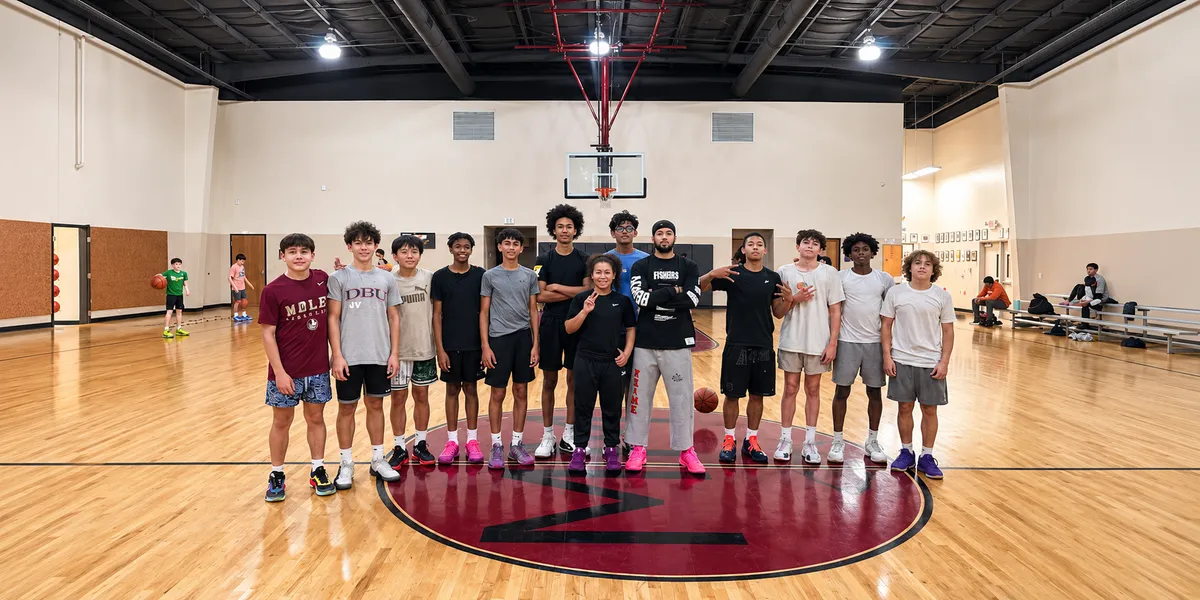
Youth Basketball Training in Lewisville, TX: Parent Guide
It's late, the kids are asleep, and you've got a dozen tabs open. Rec leagues, club teams, group programs, private coaches, weekend camps. Every one of them promises your child will get better, and you're not sure how to tell them apart. You just want to know you're spending your time and money on something that actually helps. If you're a parent looking into youth basketball training in Lewisville, this guide is meant to make that decision easier. We'll walk through the options around town, how the North Texas basketball calendar affects your timing, and the questions worth asking before you sign up for anything.
Your Youth Basketball Training Options in Lewisville
Most families in the area end up choosing from five types of programs. They aren't competing with each other. Each one does a different job, and many players use two or three at once.
Rec Leagues
Rec ball is where most kids start. It's affordable, low pressure, and a great way to find out whether your child actually enjoys the game. What rec leagues usually can't offer is individual development. Practices are short, coaches are often volunteers, and the focus is on getting everyone playing time.
Club and AAU Teams
Club teams add more games, more travel, and a higher level of competition. They're great for exposure and for learning to play with talented teammates. But club practices are mostly built around team concepts and the next tournament, so individual skill work often gets squeezed out.
Group Training Programs
Structured group training sits between team practice and private coaching. Players work on individual skills in a small group, compete against each other, and learn to train with intensity. The best programs, like a committed group and academy program, run on a long-term plan rather than a drop-in schedule, so every month builds on the one before it.
Private Training
One-on-one coaching gives your child a trainer's full attention. It's the fastest way to fix specific habits, rebuild a shot, or work on confidence. Our one-on-one program, The Blueprint, is built for players who want that level of focus.
Clinics and Camps
Clinics are short, focused events, often for a school or club team. They're a good way to try a coach's style or work on one area of the game. On their own, though, they rarely change a player long term. If your school or club is interested, basketball clinics for teams are one way to bring structured training to a whole roster.
Planning Around the North Texas Basketball Calendar
Timing matters more than most parents realize. When your child trains can change what they should be working on.
During the School Season
For middle school players, the school season usually runs through the winter. During these months, training should stay lighter and connect to what your child is seeing in games. Think sharpening a few skills, not rebuilding them.
Spring and Summer
Club and AAU basketball tend to pick up after the school season ends and run into summer. Kids play a lot of games in this stretch, which is great for experience. It also means there's less time for focused skill work unless you plan for it.
The Offseason Window
The weeks between seasons are where real change happens. This is the time to rework a shot, build a weak hand, or add strength and footwork. Players who use the offseason well are often the ones who look like a different player at the next tryout.
Why This Matters for Tryouts
Tryouts reward habits, not last-minute cramming. If a tryout or a new team is coming up, starting a few months early gives your child time to build skills they'll actually trust when it counts.
A Lesson From Pro Player Development
Professional players don't train the same way all year. Their development coaches plan the year in phases. Heavy skill work happens in the offseason. During the season, the work gets lighter and more targeted, focused on staying sharp and fixing what shows up in games. Then they evaluate, reset, and plan the next phase.
Young players benefit from the same thinking. A ten-year-old doesn't need a pro-level schedule, but they do need someone looking at the whole year instead of the next session. That's often the difference between a player who improves in bursts and one who keeps building season after season.
How Our Program Approaches Youth Development
At Prime Impact Basketball, we serve players in grades 3 through 8 across the DFW area, and every family follows the same clear path.
Step 1: Qualify
Every family starts with a qualifying call. We look for players who genuinely want to work, because the room stays better when everyone in it is serious about getting better.
Step 2: Initial Evaluation
Before any training plan is written, we watch how your child moves, shoots, handles pressure, and responds to coaching. That evaluation becomes the starting point for everything else.
Step 3: Training
Your child joins a training group or private program matched to their level and goals. Sessions are built around five pillars: discipline, intensity, precision, mindset, and consistency.
Step 4: Weekly Check-Ins
Regular check-ins keep progress on track. Players get homework between sessions, because real growth happens on the days they practice alone.
Step 5: Measurable Results
Progress gets tracked over time, so you can see what's changing instead of guessing.
The point is simple. The monthly investment isn't for workouts. It's for a complete development system with structure, accountability, mindset training, and a community of players who take the game seriously. Confidence isn't something your child is born with. It's something they build, and this is how we help them build it.
Questions to Ask Before You Choose a Program
Whatever you decide, these questions will help you compare basketball training in Lewisville on more than price and convenience.
About the Coach
What is their background in player development?
Playing experience is nice, but teaching experience matters more. Ask how long they've been developing young players and what that work looked like.
How do they handle mistakes and confidence?
A good coach can explain how they help a frustrated kid reset. If the answer is "we just push harder," keep looking.
About the Plan
Is there an evaluation before training starts?
Programs that skip the evaluation are usually running the same drills for everyone.
What happens between sessions?
Ask about homework and check-ins. If nothing happens between sessions, progress will be slower.
About the Fit
Who else is in the room?
Your child will train harder around players who want to be there. Ask how the program keeps standards high.
How will we know it's working?
You should hear a clear answer about how progress gets measured and shared with parents.
You can find more answers to common questions on our FAQ page, or skip ahead and book a qualifying call to talk through what your child needs. The right program should feel like a partner in your child's development, not just another spot on the family calendar.
FAQs
What age should my child start youth basketball training?
Many kids start benefiting from structured training around third grade, when they can focus through a full session and follow coaching. Before that, playing for fun and building basic coordination matters most. Your child's interest is a better guide than their age.
Can my child do group training and play on a club team at the same time?
Yes, and many players do. Club teams give your child games and competition, while training gives them the individual work that team practices don't have time for. The key is keeping the total schedule manageable so your child doesn't burn out.
How many days a week should a young player train?
For most players in grades 3 through 8, one to two structured sessions a week plus short homework on other days is a solid starting point. More isn't always better. Quality and consistency matter more than total hours.
Is group training or private training better for my child?
It depends on what your child needs right now. Group training builds competitiveness and works well for steady, long-term development, while private training is better for fixing specific habits or rebuilding confidence. A good coach can help you decide after an evaluation.
Do I need to stay during my child's sessions?
That depends on the program and your child. Some kids focus better without a parent watching, while others like knowing you're there. Ask the coach what works best and how they share updates with parents.
What should my child wear to their first training session?
Basketball shoes, comfortable athletic clothes, and a water bottle are all they need. Arriving a few minutes early helps them settle in. Most importantly, they should come ready to listen and work.
